ART BTEC Header

ART BTEC Header

Friday, 16 September 2016

GROUP 2. Week 1 Checklist

GROUP 2.

The work you should have complete by the end of Monday 19th September is:

  • Sustained pencil drawing of your tool from direct observation.
  • A good set of photographs of your tool, dramatically lit with detail shots and interesting camera angles. Print a contact sheet of all your photos and print 4-6 of the best images out larger (A4).
  • Expressive A1 Charcoal drawings (photograph for your sketchbook).
  • Expressive A1 Ink drawings (photograph for your sketchbook).
  • Collage base piece with drawing and use of acrylic paint (A3 on card).
  • Gold card plate cut ready for inking up and printing next week.
  • At least one good monoprint.
  • Research work looking at Jim Dine and Florian Nicolle (4 pages).
Stretch and Challenge/Directed Study


  • Make another sustained drawing from your Tool using a different media such as biro or fineliner.
On Monday you will need to select a piece of work you have produced in Week 1 to display on the workboard in our baseroom, this will be a display that changes on a week by week basis.

Don't forget you need to bring £2.50 on Monday as a contribution towards specialist Group Materials we will be using next week - we've ordered some lovely Spray Paint colours for you!

GROUP 1. Week 1 Checklist

GROUP 1.

The work you should have complete by the end of Monday 19th September is:

  • Fully resolved A2 observational painting from the Colour still-life. No grey card showing and all areas built up thoughtfully with tone, colour and detail.
  • 2 of your own Photographic Joiners based on the still-life arrangement.
  • Homework Research investigating David Hockney's Photographic Joiners.
  • Homework tonal pencil drawing (full page sustained piece) based on a section of the still-life.
Stretch and Challenge/Directed Study


  • Add a further Artist research by looking at Alison Watt's paintings of white fabric.
On Monday you will need to select a piece of work you have produced in Week 1 to display on the workboard in our baseroom, this will be a display that changes on a week by week basis.

Thursday, 15 September 2016

Group 1 - Photographic Joiners

Don't forget to bring cameras/cameraphones/card readers/download cables in with you tomorrow (Fri. 16th September).
You will also need to ensure you have some printing credit (or bring money to top up).


A few tips for when you do your photo joiners:
  • It helps to take your photos all from approximately the same position. Move the camera to capture different sections, rather than wandering around - otherwise you may end up with a set of very disjointed images.
  • Whilst you are going for a fragmented look if you vary the zoom or viewpoint too much the whole thing quickly becomes incoherent.
  • You will be surprised at how many photos you need to make an effective joiner, as there is inevitably some that aren't useful - I'd suggest a minimum of 30 shots.
  • I found when working at A3 scale (for final joiner collages) that selecting the "Wallet Prints" option from the printer wizard was the most effective - this gives you 9 images on an A4 printed page. 

Monday, 12 September 2016

Hockney Joiner Research (GROUP 1)

Photo Joiner by Hockney - Portrait of his Mother
Later this week we will be undertaking some photographic collage work to prepare for this you need to undertake some research. You need to find and print out at least 4 examples of David Hockney’s “Photographic Joiners”. Research this aspect of his work and analyse at least 2 of the images you have found in depth. This work should be thoughtfully presented over at least 2 sketchbook pages.
The work will be assessed as part of your project submission, you need to finish it by Monday 19th September, as there will be fresh homework tasks next week.

RESEARCH

  1. Title your pages with the Artist’s name, in this case David Hockney, you might consider using fonts available online from sites such as www.dafont.com

  2. Find good examples of Hockney’s photographic joiners – not paintings and not tiny jpegs that print out pixellated.

  3. Give a little background information on the Artist, when he was born, when he started to make his photographic collages and why.

  4. Include quotations from the David Hockney (ideally that relate to his photographic work). Try www.artquotes.net

ANALYSIS

  1. Give a detailed description of the artwork.

  2. Analyse – comment upon use of colour, composition, technique/media, scale etc.

WRITTEN RESPONSE


  1. Give an opinion on the Artworks, but ensure you justify what you say. Avoid simple value judgements (‘I really like/dislike…’) or vague, meaningless statements (’This piece is really effective’). Comment upon how successful or unsuccessful you find the artwork, and give specific reasons why you hold this opinion (I find this joiner particularly interesting because of the way in which the Hockney has explored mixing up different scales and viewpoints).

  2. What is the relationship between this work and your own? Identify and explain connections between this artist’s work and your own.

VISUAL RESPONSE


  1. We will be responding to Hockney’s work by producing our own Joiners based on the still life arrangement, look at how Hockney makes his images to help you create your own.

OVERALL PRESENTATION


  1. Take pride in the overall presentation of your research, it should not be rushed. Consider each element carefully:  type, layout, titles, visual responses etc.

Tool Photography (GROUP 2)

For the printmaking you will be starting later this week you will need a range of photographs of your Tool. Make these as dramatic and interesting as possible. Zoom in, choose unusual angles, consider lighting, cropping and viewpoint carefully. You might make use of cast shadows or select a specific background for your shots.
Take 15 - 20 shots and print 4 - 6 of the best at A4 or A5 scale. Here are a few sample shots to give you the idea:


GROUP 1 - Drawing Homework

To complement the work we are doing in class you should make a sustained full page pencil tonal drawing working from photos taken of the still life arrangement. You should aim to spend 4-5 hours on this drawing and complete it by Monday 19th September (it will be assessed as part of your project).
Select a good photographic image that is relatively complex (probably best to get something from a different viewpoint than your observational painting). Set your composition out carefully with a B/HB pencil in line then add a range of tones using softer pencils (2B - 6B), make sure your darkest tones use the full depth of tone you can achieve (press hard).
This should be a sustained piece that shows off your drawing ability to the full, you might use a rubber to help you pick out the highlights.

Tool Project Brief.

BTEC EXTENDED DIPLOMA in ART & DESIGN
1st YEAR PROJECT BRIEF

PROJECT– Tool
SPECIALISM: MIXED MEDIA/TEXTILES 


TIME: 2 Weeks
MATERIALS: Mixed Media
RESOURCES: sewing machines, drawing materials, spray paints, printing press and photocopier/IT.

ASSIGNMENT OUTLINE:
Textile design is an ever growing and evolving area of art and design, with individuals involved in this field now implementing an impressive array of techniques and processes serve to enhance and enrich their work.
This project asks you to look at textile design from an entirely different perspective to that which you have possibly been previously accustomed.
By using a basic hand-tool as your starting point, you are required to produce a body of work, which represents your object in a number of different ways. You will, as part of the process, and by using a variety of techniques and materials, consider and tackle texture, mark-making, surface pattern, scale and form.

GUIDELINES
  • Having selected an appropriate hand-tool (this should be an object which has a number of different working parts, textures, different materials in it’s construction, interesting negative shapes and strong structural elements). A mechanical hand whisk, hand drill or ‘lazy-fish’ corkscrew would all be good choices - you should begin by carefully examining and scrutinizing your object through sustained drawing; visually recording its basic construction and trying to understand exactly how it works and what it is used for.
  • In order to get a real feel for your object you should produce a range of studies in a sketchbook, initially in pencil, which are the product of some careful observation and strive to record the different surfaces and textures that your object might possess as effectively as possible. Try to use relevant pencil grades and mark making in this process – for example, plastic handles might be better tackled with a softer B pencil, whereas metal blades would be more realistically documented through harder F/H pencils. Vary your scale and vantage point for each drawing, this will allow you to produce a good range of outcomes and also help you to produce the best images for the technique work that comes later on. At this stage you should also look at a range of artists who are particularly well known for their use of drawing as a means of recording an object. In order to do this properly, you should include visual responses and coherent written analysis which considers their use of mark making technique, exploration of line and tone how successful these are and how you might adopt the same methods yourselves. Good people to look at include Jim Dine and Peter Randall Page.
  • Using your camera to record your object will also allow you to develop some interesting imagery which could be manipulated through IT later on. Take close-ups as well as long shots.
  • Once you are happy with your initial studies, start to introduce some more adventurous and unusual drawing techniques/materials. Consider colour and some more expressive ways of recording what you see in front of you.
  • You will be introduced to a number of new processes (printmaking and spray stencil for instance) and you will need to include examples of these in your sketchbook.  
  • As the project progresses you will be encouraged to explore techniques such as photocopying, collage and stitching to create further imagery. Again, record all outcomes in your sketchbooks together with examples of the work of others who use such techniques in their own work, details of suggested research will be posted on the Blog.
MINIMUM SUBMISSION REQUIREMENTS:
1 x sketchbook

REFERENCES:
Use the library and the internet in order to source this information – this will help to develop your individual research skills and vary the research material obtained. Lists of appropriate individuals may be given at certain points of the project to help you.

WELCOME! ...and Colour Brief.

Welcome to a new year of students here at Alton - This Blog is the place to come for course news, to do lists, project information, practical tips, example work and  forthcoming events (trips etc.).

So here is your first project brief (FOR GROUP 1):


BTEC Extended Diploma 1ST YEAR PROJECT BRIEF.

PROJECT:  Colour.
SPECIALISM:  Fine Art (painting).

CONTENT:
Initially working from direct observation we will be exploring different aspects of colour by creating a series of images. Our visual reference material will be a still life made up with a variety of brightly coloured hanging drapes and objects. As we move through the project our focus will shift from observation towards more intuitive and abstract uses of colour. Over the course of the project we will use paint, photography, drawing media and collage techniques. We will enrich our understanding of how Artists approach abstraction through sketchbook based research.

Week 1: Observational Painting:
We will be producing 1 or 2 observational paintings on an A2 scale. Alongside this we will be undertaking some photography and making collages and drawings.

GUIDELINES for your Observational painting:
·         Think carefully about your composition, how much of the still life arrangement should you include to achieve the most visually stimulating image?
·         Look hard at what you are painting, you should visually analyse shapes, colours and tones and observe how they relate to each other.
·         Use paint with confidence, you need to approach your piece with energy and enthusiasm. Start with your biggest brush, and don’t be afraid of making mistakes.
·         Be imaginative in your interpretation of colour: Look for and exaggerate hints of colour within colours (e.g. cool blues in areas of shadow).
·         Mix colours do not use colours straight from the pot. When lightening and darkening colours use other colours other than black and white to do this (you should not need black at all).
·         Use your water to alter the consistency and quality of the paint, use a range of applications from thin washes to thick impasto.
·         Look around you and learn from the approaches of other people in the group.

Week 2: Mixed Media Abstraction
In the second week of the project we will produce a sustained A1 mixed media abstraction. Initially we will work rapidly with a series of different materials (charcoal, newsprint, paint, pastels, tissue, scrim and hessian), before spending time refining and balancing our final images. We will conclude the project with a group crit and produce a written evaluation.

GUIDELINES for your Mixed Media Abstraction:
·         Be bold and experimental with the range of materials available to you, ensure you utilise the range of mark making techniques these materials allow you to achieve.
·         After using the still life as a starting point try to put all thought of representation out of your mind, and work within an entirely abstract context.
·         Be aware of the decision making processes that go into producing a successful abstract composition, good abstract work does not occur through accidental means.
·         Use colour imaginatively, to lead the viewer’s eye, to provide an illusion of depth, to create mood and atmosphere etc.
·         Work on your image from all sides. Rotate it, try working flat and at an easel for different effects.
·         Change the consistency of the paint to change the character of the marks you make.
·         Use texture carefully, large build ups of material can easily unbalance an image.
·         Don’t be afraid of making mistakes or making radical changes to your painting.
·         Taking material away (e.g. tearing layers back) can be just as effective as adding to an image constantly.
·         Continue to mix colours and avoid the obvious.

 ASSESSMENT CRITERIA:
You will be marked on how effectively you:
·         Demonstrate confidence and skill in the handling of paint and mixed media.
·         Select and resolve compositions.
·         Observe and record.
·         Demonstrate understanding of techniques and concepts (such as spatial use of colour) and effectively integrate these into your practical work.

SUBMISSION REQUIREMENTS:
·         At least one well resolved A2 observational painting.
·         Fully finished A1 Mixed Media Abstraction.
·         A set of at least 20 photographs of the still life arrangement (print thumbnails of them all and include the best 3 or 4 shots as larger A5 printouts)
·         At least one photomontage/joiner based on the Still Life inspired by David Hockney’s work.
·         2 pages of research into David Hockney’s photographic joiners thoughtfully presented alongside your own analysis.
·         A sustained Tonal pencil drawing based on your still life photography in your sketchbook.
·         A collection of images (minimum 6) by abstract artists, thoughtfully presented in your sketchbook with analytical comments and visual responses.
·         Word-processed project evaluation (300-500 words).

REFERENCES:
For Photography: David Hockney.
Abstraction: Hans Hofmann, Howard Hodgkin, Albert Irvin, Gerhard Richter, Jackson Pollock, Willem de Kooning, Richard Diebenkorn.
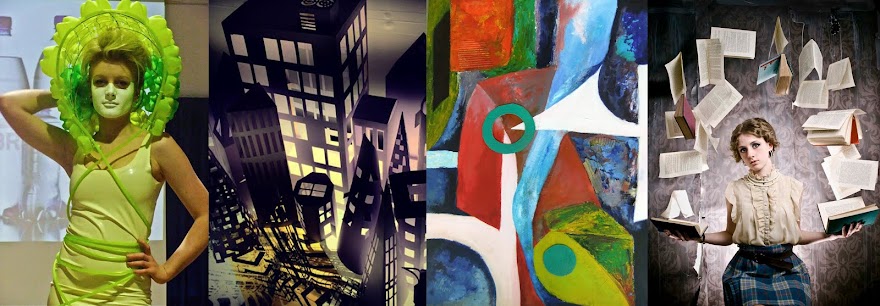


Thursday, 30 June 2016

NEW DESIGNERS WORK

YOU NEED TO MAKE YOUR ARRANGEMENTS TO VISIT NEW DESIGNERS. THURSDAY - SATURDAY THIS WEEK FOR FASHION, TEXTILES AND DESIGN CRAFTS. 
THURSDAY 7TH JULY - SATURDAY 9TH JULY FOR GRAPHICS, PRODUCT, FURNITURE, INTERIOR ARCHITECTURE, PHOTOGRAPHY, ILLUSTRATION, ANIMATION ETC.
TICKETS ARE £12.50 ON THE DOOR WITH STUDENT iD (this is cheaper than advance purchase). SEE THE NEW DESIGNERS WEBSITE FOR MORE DETAILS:
http://www.newdesigners.com/

BTEC 1ST YR EXTENDED DIPLOMA IN ART & DESIGN

DESIGN DIARY SUMMER  PROJECT  NEW DESIGNERS

PART 2 
                      
Rationale:

This project is part 2 of the work to cover unit 5 and in addition to your first year essay and the review of our art exhibition will cover the criteria required for this. The Design Diary is an ongoing resource  that can be added to at a later date and something that will be taken to interview to show you are aware of the history and the context  of your specialist area.

Aim:

Ø   From your visit to New Designers pick 4 artists or designers from your chosen specialist area that you feel  you are strongly drawn to. At least one of these should be from the ‘One year on’ room which is practitioners who have been out a year already.

Ø   Answer the questions 1-9.  Present this written work within your design diary.  Produce 15 A4 pages showing a coherent analysis of this work.  Inventively present this using photographs, postcards and other information Comments should be in as much detail as possible and have the analysis and evaluation of an essay.

Ø  Make your own responses to this work within 2 responses to each artist/designer- 8 in all.  Spend time on these trying to create these to look as professional as possible.  Use manual or digital ways of working to respond. 

1.      Try to answer the following  questions.  If you cannot find out the answers to these easily try being creative, try emailing the artist/ institution that represents them or using face book, or following a blog/website for info  to discuss etc to gain information on them. 

2.       What is their work like?  How would you describe it?   What makes them stand out from other exhibitors for you? What techniques or processes do you think they use and what exactly makes them so successful?

3.      Who do you think has influenced them and what is their work like?   Have things such as - politics, music, fashion, changes in materials or technology processes had an effect? Can you show influences and compare or contrast these similarilties together?  

4.      What themes or ideas are in their work ? How do these artists\designers communicate messages or meaning within their work?  What logos, slogans, visual imagery or mark-making do they utilise to produce their work?

5.      Who are some of the clients they have worked for?  What internships do they have planned?  Can you document this work and give examples of large and small commissions/ jobs they have covered?

6.      Give evidence of quotes, opinions and comments from other people if available .  These may be from catalogues, newspaper cuttings, websites, TV programmes, blogs, face book etc.  The more variety of information,  the more interesting your diary.  They may lead you to look at other artists whose work you like.  You will probably have to dig around to get this and anticipate this will take time - be persistent.

7.      Why have you chosen these artists\designers to analyse?  What relevance does their work have on your own interests?  Do you use similar techniques etc or do  the concepts/ideas they promote appeal to you? Why are you so attracted to this work?  Is it that you find the markmaking original, messages in adverts inventive, appreciate the form and structure of a sculpture etc.?  Please elaborate as much as possible.

8.      What materials, processes and technology have they adopted that have shaped their ideas and given the work a distinctive style.

9.      Produce 8  sustained responses to the designers you have looked at (minimum  2 for each artist/designer) by making samples, tryouts, drawings, typography in the style of this work to show your interests.  Present this in an appropriate way next to your analysis.


Friday, 10 June 2016

Design Diary Part 1

BTEC 1ST YR EXTENDED DIPLOMA IN ART & DESIGN

DESIGN DIARY

Unit 5: Contextual Influences in Art and Design

PART 1

RATIONALE

This review is designed to give you the opportunity to develop your critical skills to be able to evaluate others work and in doing so find out what interests you within art and design. It will also give you a deeper insight into the area you wish to specialise in.

AIM

Write a 1,000 word review of one student’s work in the final major project show.  Inventively present this work to start the ongoing sketchbook of the Design diary.
Camera and photocopying card required.

TIME

You must take photographs of :

•           the whole show
•           individual pieces
•           details
•           evaluation
•           sketchbook  
Take photos immediately so you have a record of this show before it comes down. 

Have a good look around all of the show soaking up the ideas, exhibits and range of pieces students have worked on.  Try to find one person’s work that you really feel drawn to and that is within a specialist area you feel interested and inspired by. Study this work in detail looking at final pieces presented as well as exploring sketchbooks, development pieces and reading the evaluation that will explain the project this person set themselves. You will discover a lot of answers from analysing this. Answer the following:


1.      Why is this work interesting? Describe the work in front of you, what specialist area is it and why have you picked this one to discuss?

2.      What primary sources photographs and drawings did this student have?  Discuss who or what has been involved in these and how well you think the student has done to achieve this imagery.  In what ways have they then gone on to using this primary sources and making it express an idea? Did they draw from it, use gold card, manipulate on top of it, turn it into a screen print etc

3.      Why are you drawn to this work?  What aspects interest you?  Is it the inventive way a message or idea is expressed, ability to observe or draw, the ability to manipulate materials or is it thought provoking and does it make you consider things around you differently? Please expand. Is it the interpretation of the idea, use of colour, process or technique that makes it enjoyable? Discuss their use of type or style of messaging they have used.  How has attention to detail been considered?


SKETCHBOOKS

4.      Analyse their sketchbooks and within your report discuss these in detail.  How many are there for 9 weeks work?  Do you think there is enough work?  In what ways do these sketchbooks develop and unfold ideas?  How are connections made between imagery? Look at the artists used,  the websites chosen etc look in the back of the evaluation at the bibliography.


5.      Who or what has been their inspiration for this project?  Have there been a number of different influences to bring this show together?  Which artists and designers  have they  been influenced by and how have they made their final pieces reflect a sense of this work?  Can you show imagery of their influences.?

6.      What have they produced to show development and ideas that have produced this work.  Are there studies, maquettes, try outs of some sort or further images not chosen in the show that you consider pivotal to this work?

PRESENTATION


7.      What do you think about the choice of things they have mounted up.  Has this person selected the best images in your opinion?   Is it ambitious and if so how exactly?  What makes it so, is it the range and diversity of garments, quality of drawing or objects etc?

8.      How have these students exhibited their work?  Draw a plan of the layout and review this.  Do you think it was presented appropriately?  What makes it look professional and how have they used additional objects, materials or colours to set off their pieces?

9.      Draw a plan of their work and discuss what you think about the presentation of this.  How have they used the space?  Discuss how the work has been mounted and what you feel about  this work?

10.    Do you think there is enough work here for 9 weeks work?  If  this was you putting on a show,  what aspects do you think are essential to creating a successful body of work that is presented well.

MINIMUM SUBMISSION REQUIREMENTS:

·         1,000 words within an illustrated annotated review presented within a sketchbook. 
·         At least 5 pages within a sketchbook.

Deadline:  Sept 2016 first day back along with Design Diary, part 2