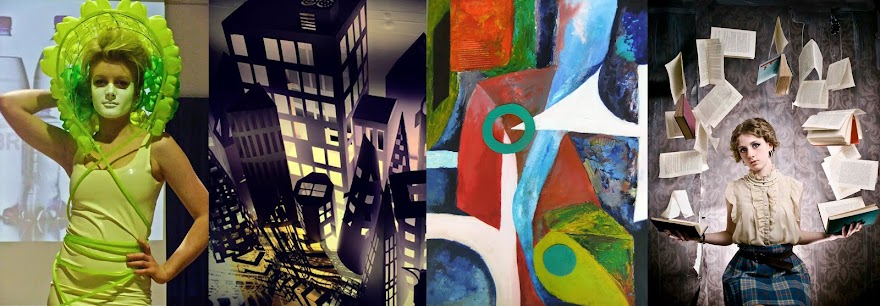
ART BTEC Header

ART BTEC Header

Sunday, 24 February 2019

FINAL ARCHITECTURE CHECKLIST AND EVALUATION

Collage Final Outcome 
Architectural Forms Project.
Evaluation Guidance.

Your evaluation should be word-processed and be  800 words in length. Please discuss anything you feel was significant to your work in this project, but ensure you cover the following points:
  •    Go back to the start of this project and describe how you gathered source imagery for the project, how successful were your initial drawings and photos? 
  •     What did you notice within your photographs that you thought had potential for development into substantial 2D or 3D work.
  •    How did you go about developing your imagery? What techniques and materials did you use that you felt were the most successful within your experiments? Did your printmaking and collage work help you develop techniques, imagery or ideas that informed your final outcome or did your ideas come from other inspirations?  Please describe in depth how you generated ideas and found a direction for the final piece.
  •   Describe your outcome, discuss  formal elements and ways of working  such as:
    Composition, technique, use of colour and tone,structure, form, contour, scale, texture, movement, palette, experimental, concepts, target audience, metaphor, symbol, motif, narrative, advertising and communicating an idea, colour trends, fashion trends of the moment, particular making skills you have learnt or found challenging such as stitching, hemming, construction or learning a new software program, Photoshop, Adobe Bridge etc. 
  •     Do you consider your outcome successful? Discuss its strengths and weaknesses.
  •     What Architects and Artists work did you research during the project? Were any of these particularly helpful in providing ideas/inspiration for your own work? 
  •     Identify the aspects of Artists/Architects work that you found helpful or interesting.·     How well do you think you worked in this project overall? Did you manage your time effectively? Suggest improvements you might have made to your approach. 
  •     Did you enjoy the project and the ways you chose to develop ideas, if not suggest changes that might have made the project more enjoyable for another more self motivated project.  Consider time management, use of facilities and staff, how safe or adventurous you have been and how far  determined you have been to push your ideas to resolve outcomes.  
  •     Please include photos of your diary of make and photographs of your  final piece within your sketchbook.  Please submit your evaluation stuck in  and presented within your sketchbook. 
DEADLINE 4pm Monday 4th March
  
Architectural Forms Submission Requirements

Pre trip work:
    • Selection of your best photos from the College architecture.
    • Research into 2 modern Architects (see the brief for names).
    • 1 or more sustained full page pencil tonal drawings based on your College photos.
    • 1 or more controlled linear (fineliner/biro) drawings based on your College photos.
 Post Trip work:
    • Selection of your best photos from the London Trip.
    • Expressive timed drawings produced in class.
    • 1 good Gold Card print from your College photos.
    • A sustained carbon print, based on your London imagery.
    • 1 or more good Gold Card print from your London photos.
    • At least 1 sustained and successful piece of monoprinting based on London Architecture.
    • Photocopier experiments with your drawings (inverts, blue prints).
    • Paper city photographs, edit your best shots and print them out at A5/A4 for inclusion in your sketchbook.
    • Research into at least one paper engineering Artist (see link in previous post for names).
    • At least 4 Collage/mixed media pieces developed from your London imagery. Use a range of techniques to create these (refer to the brief for a list of potential media), one or two of these images could be developed through PhotoShop.
    • Research into a Collage/Mixed Media Artist (see earlier post for details).
    • Visual planning and notes that outline your intentions for your project outcome. The nature of this planning might be very different from person to person, it could take the form of Fashion Drawings, experiments with 3D media, storyboards for animation or many other things. Annotating your developmental work is important!
    • Photographs and annotation that record the process of making your outcome.
    • An ambitious and well resolved final outcome.
    • Research into at least one Artist closely associated with the approach taken in your final piece - so this could be a Fashion Designer, Fine Artist, Illustrator or Graphic Designer for example.
    • A word processed evaluation with photographs  (see the notes above).
Next week we will be starting work on an illustration project based on the stories of Roald Dahl, so start giving some thought to which book/short story you might want to respond to. Getting hold of a copy and reading it is excellent preparation.

Wednesday, 30 January 2019

FINAL OUTCOMES ARCHITECTURE PROJECT


 3D Book Illustration 

Project Outcomes:


As you complete the Collage stage you should start thinking ahead towards planning your project outcome. The format of this is entirely down to you, it just needs to be inspired and visually informed by Modern Architecture.
In the past we've had paintings, large scale mixed media work, sculpture, series of prints, animations, graphic magazines, books of illustrations, garments, jewellery!
It makes sense to produce an outcome in the area you intend to specialise in next year (if you know what this will be) as this will be of more value to your portfolio for application to Higher Education. The piece might be an extension of things we have already tackled in the project (a more ambitious collage or drawing for example) or it might explore an altogether different creative area.

There should be clear planning for your final piece in your sketchbook, so this means both annotation and imagery outlining your intentions. The nature of the imagery will depend on what you are planning, but it could take the form of painted studies, fashion illustrations, trial page layouts, photos of 3D maquettes or many other things.

Everyone should make sure they have the following in their sketchbooks:


  • 2 Mood-boards containing:

ideas of things to inspire you - artists' work, things within design that show  techniques and construction methods you aspire to
Information on the techniques that you will need-  colours, swatches, and ideas of techniques and possible processes to use.

You should be aiming to complete this planning (over several sketchbook pages) over the next few lessons, so that we are ready to start working on project outcomes in earnest on Monday. If you have particular material requirements for your final piece (e.g. Canvases, fabric for garments)You will need to speak to technicians then you will need to talk to them today.  Start organizing all  these things now.  It is your responsibility to make sure your project get's off to the easiest, most productive start. 

As you begin work on outcomes next week remember to record your progress so you can include photos and imagery of the creative journey you take with this piece. A diary of make is essential. 

Monday, 28 January 2019

ARCHITECTURE CHECKLIST BEFORE DEVELOPMENT BEGINS...

 Digital Collage
So to recap on what you should have before you embark on development/realisation of your project outcomes:
  • A selection of photos from the College Architecture, print contact sheets of your shoot and include the best shots printed out at A4 or A5 scale.
  • At least one full page sustained careful pencil tonal drawing from your College photos (this should represent at least 3 hours work). 
  • Minimum of one or more full page precise linear drawing using fine liner. 
  • At least 4 pages of research into 2 contemporary Architects (see the project brief below for names). Include background information and analysis of some specific buildings/projects. Discuss materials, aesthetics (form) and function. Include good reproductions of the Architect's work and take care over presentation.
  • Contact sheets of your London Photographs.
  • A range of your best London shots at A5 or A4 included in your sketchbook.
  • At least one A4/A3 sustained and detailed monoprint based on a London photograph.
  • A detailed A3 Gold Card based on London, cut and printed.
  • A monoprint onto collage image
  • An A4 carbon print from a complex London image.
  • A set of timed expressive drawings.
  • Photocopier experiments with your drawings (inverts, blue prints).
  • Research into at least one Artist who uses paper engineering in their work, references here http://weburbanist.com/2008/12/02/papercraft-creative-paper-art-design-sculpture/
  • "Paper City" photos - include contact sheets and larger versions of your best shots. 
  • Produce a range of mixed media Collages (4 or more) making use of the bank of Architecture based printing, drawing and photography you have accumulated and adding paint, coloured papers, acetate overlays, text etc.
  • 2 pages of research into one Collage/mixed media Artist (see previous post below for names).

Tuesday, 22 January 2019

COLLAGE WORK ARCHITECTURE

Some examples from previous students.

By the end of Wednesday 30th you should have created 4 (or more) mixed media collages. Use your existing Architecture imagery as the basis for this - prints, photos and drawings. Try manipulating them on the photocopier or through Photoshop too. Combine this imagery with the additional collage ingredients supplied - coloured papers, stickers, tape, squared/graph paper, raffle tickets etc. 

A few pointers:

  • Inclusion of text, numbers and symbols can be very effective.
  • Using strong focal points (e.g. a larger image of a particular building) often helps your collages becoming too fragmented.
  • As well as papers you might work back into your collages with paint, spray stencils, pens etc.
  • Along with addition be aware that subtraction can be a key part of the collage process. If your images become overcrowded using areas of plain papers or white paint can be an effective way of freshening up your piece. Careful consideration about the retention of areas of space as you make the collage is another way to do this.
  • As with other images we have created this year producing a composition with balance that leads the viewer's eye as you intend is the ideal. Repetition of colours or symbols can help achieve this, along with strong directional elements.
Supporting Research

To inform your own collage experiments you should look at the work of all the following Artists/Designers who use collage techniques in creating their work. 

Once you have familiarised yourself with their work choose one of the Artists whose work is illustrated below and produce 2 pages of research into their practice. As usual obtain several good reproductions of their work, provide some background information and analyse at least 2 images in depth, identifying what media are being used and commenting on how they are being handled is particularly important. 
Discuss ideas such as:

Use of materials- how do you think they have produced this image?
What makes their marks, technique interesting?
What combination of materials and techniques are they using?
Can you describe the use of space, composition, form and use of colour within this work?
How does the eye travel around the piece?  What parts are you drawn to and why?
How have they made the architecture theme 

Richard Galpin

Martin O'Neill

Robert Rauschenberg

Nazario Graziano

Tim Marrs

Monday, 14 January 2019

Architecture Update

So having been to London we now have the imagery to branch out and create some really exciting work. From what I have seen you all have some excellent photography 
In addition to the work from the College Architecture (and the Architect research) from Week one (see earlier post) these are the things you should be completing by the end of Wednesday 23rd January:
  • Print out contact sheets of your London Photographs.
  • Print out a range of your best shots at A5 or A4 for inclusion in the sketchbook.
  • Complete at least one A4 or A3 sustained and detailed monoprint based on a London photograph.
  • Cut and print a detailed A3 Gold Card plate.
  • Complete an ambitious A4 carbon print from a complex London image.
  • In preparation for the paper city work we will do later this week or next   you need to research at least one Artist who uses paper engineering in their work, there are a range of names you could find out more about in this article http://weburbanist.com/2008/12/02/papercraft-creative-paper-art-design-sculpture/
Also ...

A selection of photos from the College Architecture, print contact sheets of your shoot and include the best shots printed out at A4 or A5 scale.
  • At least one full page sustained careful pencil tonal drawing from your College photos (this should represent at least 3 hours work). Choose a complex composition that will challenge you.
  • Minimum of one full page precise linear drawing using fine liner. 
  • A set of rapid expressive drawings - we will complete these as a class exercise.
  • Photocopier experiments with your drawings (inverts, blueprints).

Monday, 7 January 2019

ARCHITECTURE WEEK 1 BEFORE YOUR TRIP

Architecture Project Week 1


Before the trip on Friday you should all begin to start the following:
  • At least 4 pages of research into 2 contemporary Architects (see the project brief below for names). Include background information and analysis of some specific buildings/projects. Discuss materials, aesthetics (form) and function. Include good reproductions of the Architect's work and take care over presentation.
  • A selection of photos from the College Architecture, print contact sheets of your shoot and include the best shots printed out at A4 or A5 scale.
  • At least one full page sustained careful pencil tonal drawing from your College photos (this should represent at least 3 hours work). Choose a complex composition that will challenge you.
For this project you will need:
  • Cameras (with plenty of battery and memory capacity, also USB download cables or card readers if you have them).
  • Memory sticks/online space for saving your photos, save on Onedrive.
  • Money for a new sketchbook (or purchase online) - A3 generally best for this project.
  • Drawing media - pencils, fineliners, biros, erasers etc.
  • Printing/photocopying credit.

ARCHITECTURE PROJECT

BTEC Extended Diploma 1ST YEAR PROJECT BRIEF.

PROJECT:  Architectural Forms


TIME:  6 Weeks + Half Term
ASSIGNMENT OUTLINE:
We will be generating original 2D and/or 3D responses to modern architecture. We will develop our project outcomes through a sustained development of imagery gathered from primary sources.
We will begin the project by producing observational drawing from primary sources such as the college architecture and going to London to gather imagery from modern architecture such as The "Walkie-Talkie", Tower 42, The "Cheese Grater", The Lloyds Building, 1 Canada Square as well as Norman Foster’s “Gherkin” , British Museum Courtyard and Canary Wharf tube station.
Once we have accumulated adequate primary material we will begin to develop responses using drawing, painting, collage and 3D maquettes. After a thorough exploration of our imagery we will conclude our investigation by producing one ambitious outcome. This outcome can be figurative or abstracted and can be in either 2 or 3 dimensions.
Throughout the project we will enrich our practical work with research into relevant modern Architects, and Artists whose work has been influenced by Architecture.

GUIDELINES: 
  • Ensure you begin the project with a range of high quality observational drawings. Good line drawings are particularly valuable as they reproduce well and can be used as a starting point for more experimental collage and mixed media work.
  • Make the most of the trip, it is essential that you gather a rich and diverse body of imagery from the day. In addition to a sketchbook and basic drawing materials you will need to bring a camera (if you do not own one, borrow one or arrange to loan one from college).
  • After the trip it is important that you print photographs within 2 days, as any delay will hinder your progress in the project.
  • Once you have got your imagery you will need to be inventive and experimental in developing responses to it. As a group we will produce some printmaking and collage based images, but we would encourage you experiment widely with a range of the following approaches: 
  1. Line Drawing
  2. Photocopying
  3. Tonal Drawing
  4. Painting
  5. Integrating Text
  6. Paint Transfer
  7. 3D Maquettes
  8. PhotoShop
  9. Photo Montage
  10. Collage
  11. Mixed Media
  12. Acetate Overlays
  13. Monoprinting
  14. Relief (gold card) printing
  15. Film/animation
  16. Sewing
  17. Spray Stencils
  18. Heat transfer
  • Imagery derived from modern Architecture lends itself towards abstraction, try zooming in on shapes, overlaying them, repeating and rotating them to develop interesting compositions.
  • Be thoughtful in your use of colour, subtle neutral colours can be very effective, and may be more in keeping with your Architectural sources.
  • Once you find an approach/idea that has potential you need to explore it thoroughly in a range of studies before attempting to resolve it in a final piece.
  • You will need to develop and realise an original and ambitious outcome. The outcome needs to express the Architectural theme in some way but the form is entirely of your choosing - it could be anything from a painting to a garment to a piece of animation. Your outcome should be clearly developed through a process of visual investigation and experimentation with your chosen media. 
ASSESSMENT CRITERIA:
You will be marked on how effectively you:
  • Observe and record from primary sources.
  • Demonstrate resourcefulness in gathering appropriate source imagery.
  • Develop your observational studies through experimentation with media and mark-making.
  • Generate ideas through purposeful investigation.
  • Demonstrate inventiveness and skill in the handling of materials.
  • Select and resolve compositions.
  • Research and present information and imagery related to the project.
SUBMISSION REQUIREMENTS:
  • Sketchbook including observational drawing, photography, developmental studies and research material.
  • A fully resolved project outcome.
  • Word-processed project evaluation (500-800 words).
(For additional guidance on submission requirements and evaluation see separate post)
REFERENCES:
Architects:  Richard Rogers, Norman Foster, Nicholas Grimshaw, Frank Gehry, Cesar Pelli, Mario Botta, Renzo Piano, Shigeru Ban, Daniel Libeskind, Santiago Calatrava. 
Artists:  Lyonel Feininger, Maria Elena Vieira da Silva, Charles Demuth, Charles Sheeler, Naum Gabo, Ben Johnson, David Hepher, Richard Galpin, Carla Klein, Brendan Neiland, Robert Rauschenberg.
WEB LINKS:
www.artnet.com/                                                       www.archinet.co.uk/index.html

Monday, 17 December 2018

Trashion Project Submission Requirements and Evaluation


When we return after Christmas we will be undertaking studio shoots of your garments/collections, date and timings to follow (Your sketchbooks will need to be submitted before you get the studio collection photos, so these are not on the requirements list below).
The first day two days back will be an opportunity to tie up any loose ends with your Fashion projects, such as printing off and mounting your location shoots.

On Wednesday 9th January we will be briefing you on the Architecture project and you will need to get started with this work straight away.
The deadline for your Fashion work is Wednesday 9th January @ 4.00pm and this is the minimum you need to have in your sketchbooks:


Initial Research and Presentation:

  • Observational drawing/s of your object.
  •  At least 2 busy pages of visual research into your garment, different versions/styles/shapes, try to find inventive Haute Couture versions.
  • Minimum 2 pages of visual research into your object - different versions, different uses, unusual applications of your object, if you can find examples of it in Fashion then include these.
  • 2 pages where you find examples of Collections. Most designers/design houses release themed collections seasonally, look for examples of collections that are inventive, exuberant and perhaps use elements of recycling – for example the work of Martin Margiela.
  • Copies of your presentation slides.
  • Any notes relevant to your presentation.

Illustration and Design Development:
  • 4 pages research into 2 Fashion Illustrators.
  • Your photos from the figure (the ones you used as a basis for your Fashion Illustrator responses).
  • 4 Well finished Illustrator responses based on your photos.
  • 6 garment proposals (with notes, using the templates.  These can be quick initial ideas).
  • 3 Final proposals showing well thought out ideas
  •  A finished Illustration based on your best design - this should be a feasible design and include sample pieces, annotations and colour swatches alongside.
Final Garment, Photography and Evaluation.
  • 4 pages research into 2 Fashion Photographers.
  • Annotated photographs documenting the making process with your final garment (2 pages).
  • Your finished garment/accessory.
  • A thoughtfully styled location shoot of your garment - be ambitious, think about the photographers whose work you have studied. Arrange model, location, props, make up. Consider posture and camera angle carefully. Take plenty of shots (20+) you might use PhotoShop to enhance your best shots for inclusion in your sketchbook.
  • Your word processed evaluation (see guidance notes below). 

RECYCLED FASHION EVALUATION GUIDANCE
In order to pass this project you must complete a word processed evaluation of 500-800 words, discussing the following ……

  • What object and garment did you get to work with?
  • How did the development of your Presentation help in understanding the possibilities offered by your object. What sources did you access in researching your object and garment?
  • In what other ways did you respond to and investigate your object? (e.g. photography and drawing)
  • Who were you collaborating with? How did you share tasks? Do you think you communicated effectively together? Did you find this collaboration helpful?
  • Which designers/collections did you look at? What appealed to you about their work?
  • What did you learn from looking at the designer’s work? Did their work influence your own garment designs later in the project?
  • What were your first ideas for your garment design? Did these bear much relation to your final solution?
  • What was it that appealed to you about the fashion illustrators you chose to research and respond to?
  • What did you learn from recreating the styles of the illustrators you looked at, and how did this help you to understand the techniques employed in fashion illustration?
  • How did you go about creating your own fashion illustrations – what processes did you employ in developing your final images? Describe how you used photography to style them initially and what you did to get them to a high standard.
  • Which Fashion Photographers did you research? What appealed to you about their work?
  • Describe the process you went through to create your initial garment designs, and how you decided upon the one you chose to make.
  • What elements of your original garment did you retain and what was added/taken away?
  • What materials and techniques did you employ in the production of your final garment and what problems did you encounter along the way?
  • Discuss your final photoshoots, how did you style your garment? Mention aspects such as make up, props, location, models, postures, lighting, composition.
  • Do you feel your final garment will work well with your collaborators? Did you maintain good communication throughout the project?
  • What do you regard as the most and least successful aspects of your project?
  • How well did you manage your time and what you would do differently if you did this project again?

Monday, 10 December 2018

Fashion Project Update and Photography Research

Garment Completion and Sketchbook Content

OK, so you should all be well underway with garment construction by now. Make sure you have the resources you need: as many multiples of your object as your garment requires and potentially a base garment to reconstruct/work over. You may need other things such as additional fabrics, dyes, zips, clasps, velcro etc.
Shop for any bits that you are currently short of. If you have an ambitious plan it is essential to work in a focused way to resolve it properly.
Any finishing work to your illustration research/ responses/design development needs to be completed as self-directed study now. 
From now until when the project is submitted the things that need to be added to sketchbooks are:
  • Some photographic documentation of stages of your making process, with annotation/explanation.
  • Contact sheets and larger prints of the best images from a location shoot.
  • 4 pages of research into 2 Fashion Photographers (see information below for guidance).
  • Word-processed Project Evaluation - guidance for this will be issued.

Studio Photography (after Christmas)
We will also arrange a studio shoot for your garments in the week when we return after Christmas, we will get some of the second year students specialising in Photography to work with you to get the best imagery from this session. This will be an opportunity to record your garment alongside the other creations in your collection. 


Location Photography (over Christmas break)
Thinking a little way ahead you should start giving some thought to your location Photoshoot - this should be completed over the Christmas break, but your planning should start now. You should be aiming for a professional approach with this that results in great imagery for your portfolio.
Consider who will model for you (or who will take photos if you are modelling your own garment), where you will base the shoot (what will complement the garment?), will you need props/make up? Taking a professional approach may mean doing things like researching the weather (if you are looking at a shoot outdoors) and working around when it looks likely to offer you the best light/conditions.

Fashion Photographer Research
In order for you to plan and execute effective final Photoshoots for your garments it will be helpful to make yourself aware of the work of some top Fashion photographers.
When looking at these Photographers work you should look for the following things and comment on them:
  • Use of location/studio - how does this relate to enhance the garment?
  • Use of make up.
  • Use of props.
  • Use of the model(s) consider things like body posture, what mood is the photographer trying to create?
  • Use of lighting - natural/artificial? harsh/gentle?
  • Composition/cropping - how is the figure placed within the image?
  • Use of post production - has the image been manipulated via software such as PhotoShop to achieve the final result, how subtle/dramatic is this process?
You should look at 2 of the following photographers and provide a little background biographical information before analysing at least 3 images by each one in detail (2 pages per photographer, print out decent size reproductions of their work).

Steven Meisel
Corrine Day

Mario Testino


Ruven Afanador

Nick Knight

Perou

Tim Walker
Steven Klein

Sunday, 2 December 2018

FASHION UPDATE AND GARMENT MAKING

You need to finish your designs for your garment so that you can move onto the  construction as soon as possible next week. You should finish the tasks outlined below before next Monday (10th December) at the very latest (earlier if possible)  This will mean you can then have  2 weeks (we break up at lunchtime on Friday 21st) to make your piece. 


When you have concluded your illustration and design work this week then   start to make as soon as possible  (especially important for ambitious or complex garments).

You will need to make multiple shapes and group these across the mannequin to be sure the visual effect is both showing off the manipulation of your ordinary object as well as reflecting something contemporary about couture fashion. 

We will arrange a studio photo shoot opportunity in the first week back after Christmas and we will be asking you to complete location shoots over the Festive break. Some fashion photographer research will support this phase of the project.
  • 4 pages of research into 2 Fashion illustrators, include a range of their work and your analysis of their technique.
  • A range of your photographs of the figure in "fashion" poses, printed out and included in your sketchbook.
  • 4 illustrator responses developed from your own photos (2 in the style of each illustrator you researched).
  • 6-8 quickly sketched design proposals for your garment/accessory, you could use a template for these. Annotate alongside to explain your ideas and techniques you intend to use. These ideas can be variations on a theme, each one does not need to be radically different.  These should not take long. 
  • 3 final proposals that show feasible designs showing:

    • Samples of your materials 
    • Annotations of how you will put these together
    • Additional materials, fabrics etc 
    • Please indicate which is your final design (the one you intend to make) - you might choose to do this in the style of one of the illustrators you researched or develop a more independent illustrative approach of your own.  

Quick drawings using templates or freehand 


 Final proposal showing samples, annotation etc. 


    You also need to think ahead and gather everything you need for your making:

    Things you might require include:


    Garments to reconstruct/embellish, Cotton thread, zips, velcro, fabric, dyes, iron-on transfer paper, multiples of your object (clothes pegs, rubber bands etc- make sure you have enough of these, you don't want to run out !!!!.). 

    Tools you may need to make your garment - scissors, tape measure, pliers, stapler, needle, cotton- (You will need to purchase this or bring your own in) sewing machine etc  We have most of these materials here. 

    Manniquin to work on- please try to find one around the department or arrange to bring yours in if you have one.  It is not necessary to buy one. 

    Order online (eBay www.ebay.co.uk/ is your friend here) or find other ways of obtaining your resources - suppliers such as Fabricland in Basingstoke www.fabricland.co.uk/fabric-stores/fabric-land-basingstoke may prove valuable. Charity shops are a good source for garments.