Welcome to a new year of students here at Alton - This Blog is the place to come for course news, to do lists, project information, practical tips, example work and forthcoming events (trips etc.).
So here is your first project brief (FOR IVAN'S GROUP):
BTEC Extended Diploma 1ST YEAR PROJECT BRIEF.
PROJECT: Colour.
SPECIALISM: Fine Art (painting).
BTEC: Core Unit 1 (Drawing Development).
Core Unit 3 (Materials, Techniques & Processes).
Core Unit 4 (Ideas & Concepts).
Core Unit 5 (Visual Communication).
CONTENT:
Initially working from direct observation we will be exploring different aspects of colour by creating a series of images. Our visual reference material will be a still life made up with a variety of brightly coloured hanging drapes and objects. As we move through the project our focus will shift from observation towards more intuitive and abstract uses of colour. Over the course of the project we will use paint, photography, drawing media and collage techniques. We will enrich our understanding of how Artists approach abstraction through sketchbook based research.
Week 1: Observational Painting:
We will be producing 1 or 2 observational paintings on an A2 scale. Alongside this we will be undertaking some photography and making collages and drawings.
GUIDELINES for your Observational painting:
· Think carefully about your composition, how much of the still life arrangement should you include to achieve the most visually stimulating image?
· Look hard at what you are painting, you should visually analyse shapes, colours and tones and observe how they relate to each other.
· Use paint with confidence, you need to approach your piece with energy and enthusiasm. Start with your biggest brush, and don’t be afraid of making mistakes.
· Be imaginative in your interpretation of colour: Look for and exaggerate hints of colour within colours (e.g. cool blues in areas of shadow).
· Mix colours do not use colours straight from the pot. When lightening and darkening colours use other colours other than black and white to do this (you should not need black at all).
· Use your water to alter the consistency and quality of the paint, use a range of applications from thin washes to thick impasto.
· Look around you and learn from the approaches of other people in the group.
Week 2: Mixed Media Abstraction
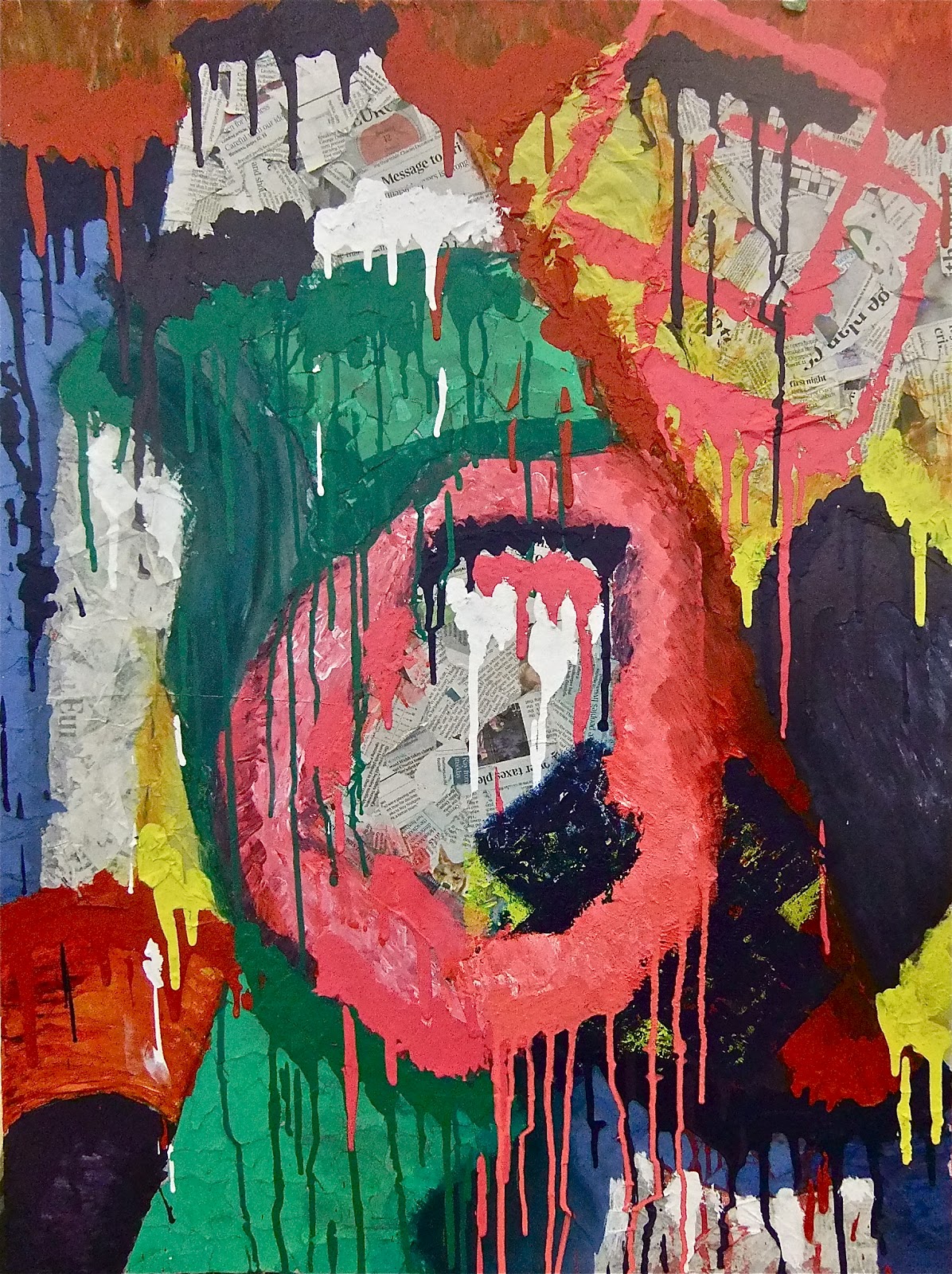
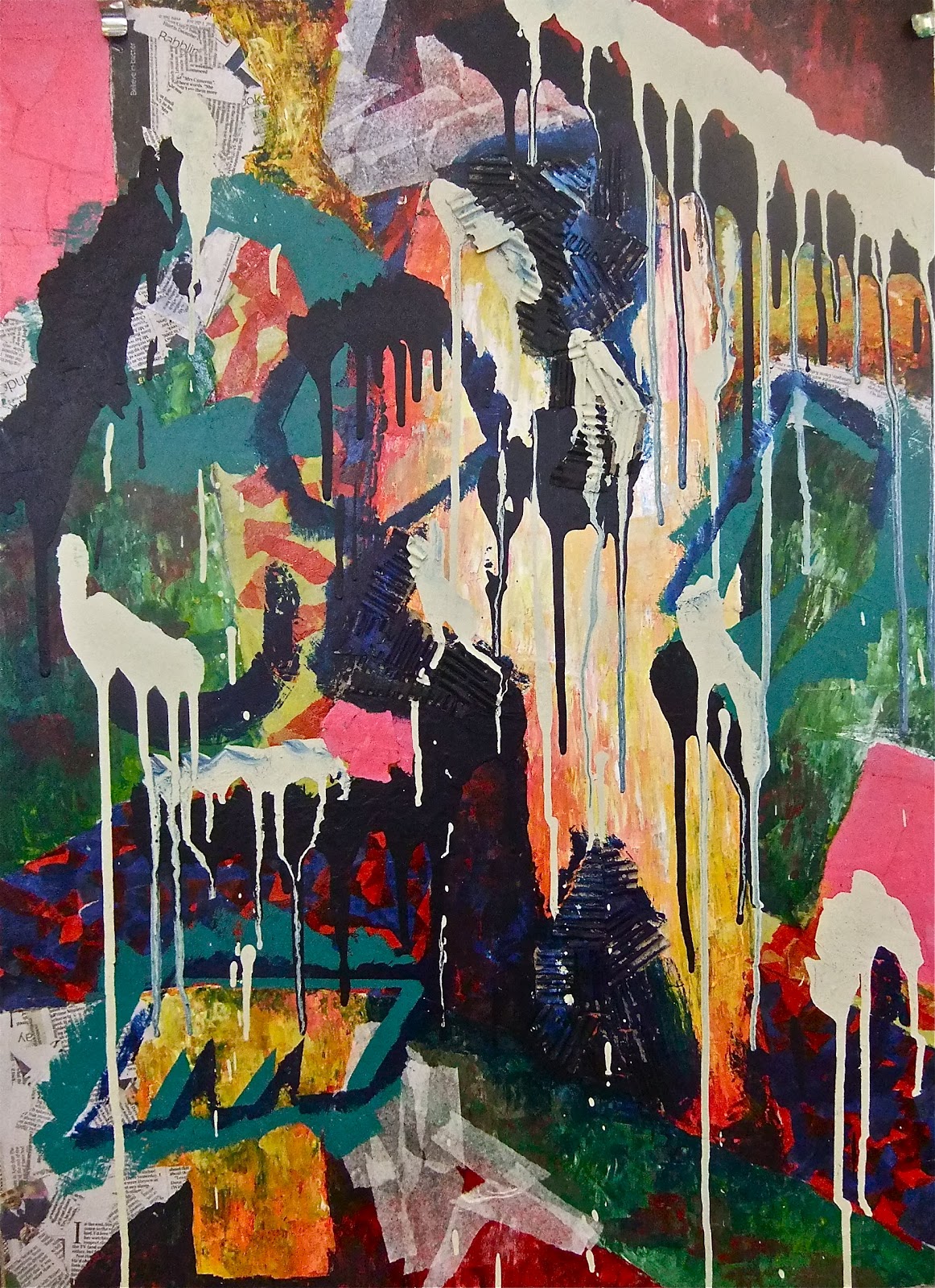
In the second week of the project we will produce a sustained A1 mixed media abstraction. Initially we will work rapidly with a series of different materials (charcoal, newsprint, paint, pastels, tissue, scrim and hessian), before spending time refining and balancing our final images. We will conclude the project with a group crit and produce a written evaluation.
GUIDELINES for your Mixed Media Abstraction:
· Be bold and experimental with the range of materials available to you, ensure you utilise the range of mark making techniques these materials allow you to achieve.
· After using the still life as a starting point try to put all thought of representation out of your mind, and work within an entirely abstract context.
· Be aware of the decision making processes that go into producing a successful abstract composition, good abstract work does not occur through accidental means.
· Use colour imaginatively, to lead the viewer’s eye, to provide an illusion of depth, to create mood and atmosphere etc.
· Work on your image from all sides. Rotate it, try working flat and at an easel for different effects.
· Change the consistency of the paint to change the character of the marks you make.
· Use texture carefully, large build ups of material can easily unbalance an image.
· Don’t be afraid of making mistakes or making radical changes to your painting.
· Taking material away (e.g. tearing layers back) can be just as effective as adding to an image constantly.
· Continue to mix colours and avoid the obvious.
ASSESSMENT CRITERIA:
You will be marked on how effectively you:
· Demonstrate confidence and skill in the handling of paint and mixed media.
· Select and resolve compositions.
· Observe and record.
· Demonstrate understanding of techniques and concepts (such as spatial use of colour) and effectively integrate these into your practical work.
SUBMISSION REQUIREMENTS:
· At least one well resolved A2 observational painting.
· Fully finished A1 Mixed Media Abstraction.
· A set of at least 20 photographs of the still life arrangement (print thumbnails of them all and include the best 3 or 4 shots as larger A5 printouts)
· At least one photomontage/joiner based on the Still Life inspired by David Hockney’s work.
· 2 pages of research into David Hockney’s photographic joiners thoughtfully presented alongside your own analysis.
· A sustained Tonal pencil drawing based on your still life photography in your sketchbook.
· A collection of images (minimum 6) by abstract artists, thoughtfully presented in your sketchbook with analytical comments and visual responses.
· Word-processed project evaluation (300-500 words).
REFERENCES:
For Photography: David Hockney.
Abstraction: Hans Hofmann, Howard Hodgkin, Albert Irvin, Gerhard Richter, Jackson Pollock, Willem de Kooning, Richard Diebenkorn.
DEADLINE: Monday 23rd September 4.30pm
...and here are details of your first research homework:

David Hockney Photographic Joiner Research
You need to find and print out at least 4 examples of David Hockney’s “Photographic Joiners” research this aspect of his work and analyse at least 2 of the images you have found in depth. This work should be thoughtfully presented over at least 2 sketchbook pages.
RESEARCH
- Title your pages with the Artist’s name, in this case David Hockney, you might consider using fonts available online from sites such as www.dafont.com
- Find good examples of Hockney’s photographic joiners – not paintings and not tiny jpegs that print out pixellated.
- Give a little background information on the Artist, when he was born, when he started to make his photographic collages and why.
- Include quotations from the David Hockney (ideally that relate to his photographic work). Try www.artquotes.net
ANALYSIS
- Give a detailed description of the artwork.
- Analyse – comment upon use of colour, composition, technique/media, scale etc.
WRITTEN RESPONSE
- Give an opinion on the Artworks, but ensure you justify what you say. Avoid simple value judgements (‘I really like/dislike…’) or vague, meaningless statements (’This piece is really effective’). Comment upon how successful or unsuccessful you find the artwork, and give specific reasons why you hold this opinion (I find this joiner particularly interesting because of the way in which the Hockney has explored mixing up different scales and viewpoints).
- What is the relationship between this work and your own? Identify and explain connections between this artist’s work and your own.
VISUAL RESPONSE
- We will be responding to Hockney’s work by producing our own Joiners based on the still life arrangement, look at how Hockney makes his images to help you create your own.
OVERALL PRESENTATION
- Take pride in the overall presentation of your research, it should not be rushed. Consider each element carefully: type, layout, titles, visual responses etc.